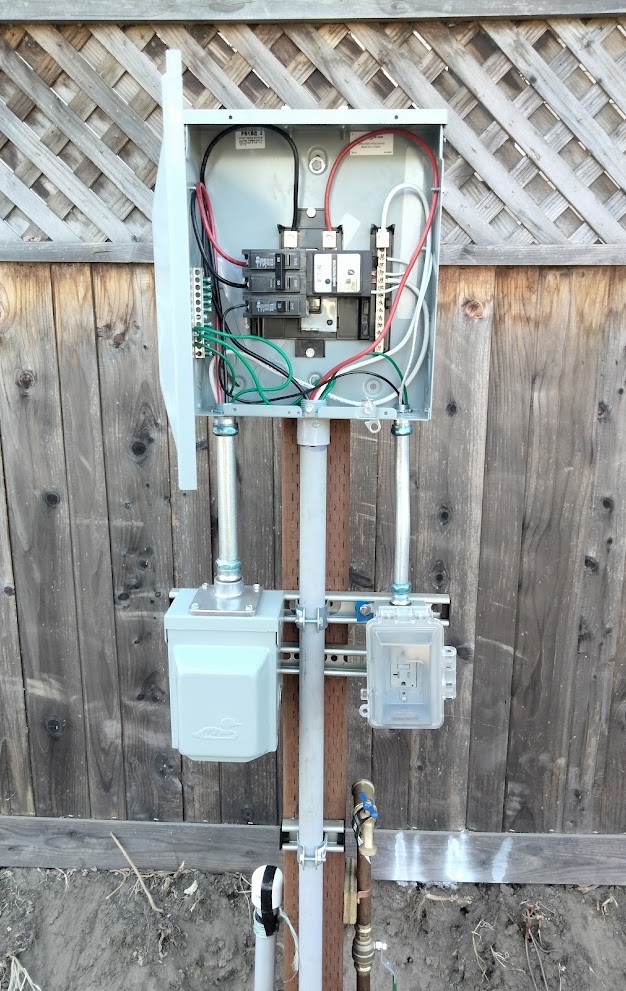
Over the last two weeks, I did (solo) electrical work at an upcoming three-unit "tiny-home community" (i.e. a trailer park) in West Oakland. I didn't install the service-entrance equipment (where the property interfaces with PG&E) (but, by golly, I now trust that I can)... I ran PVC conduit from the service-entrance equipment to the three spots where the tiny homes will plug in... to Mike-installed utility "pedestals" (pressure-treated 4x4 posts in concrete). The pedestals have subpanels (with surge protection), 50-amp RV receptacles, and convenience outlets. I also brought PVC conduit to the pedestals for internet. Another company did the trenching and put hose bibbs (spigots) on the pedestals.
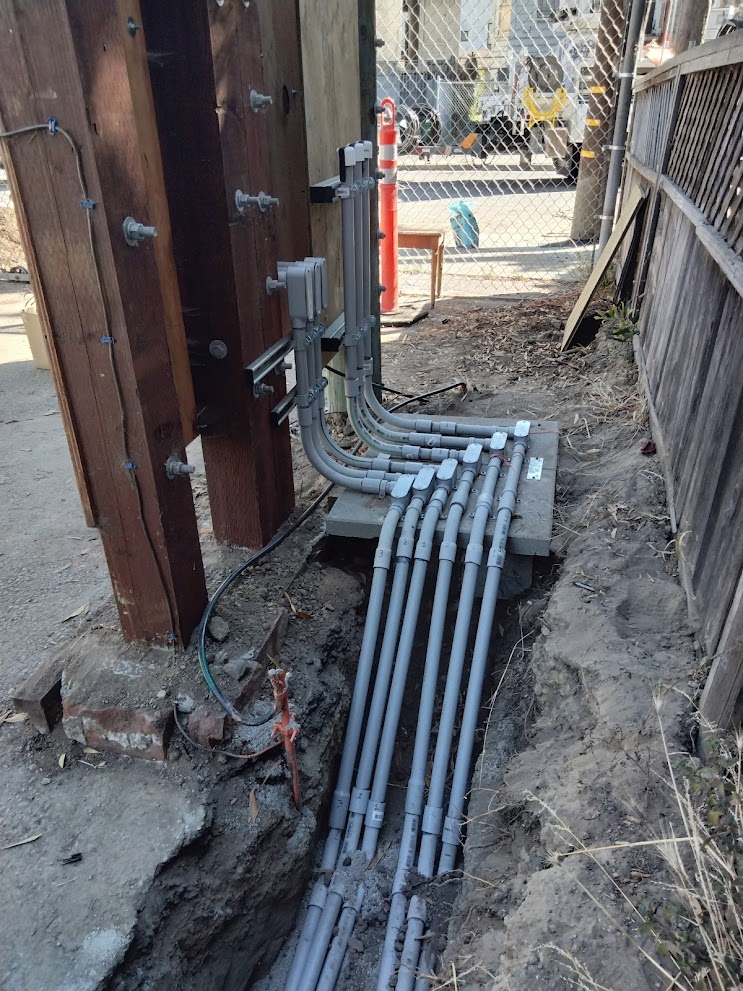
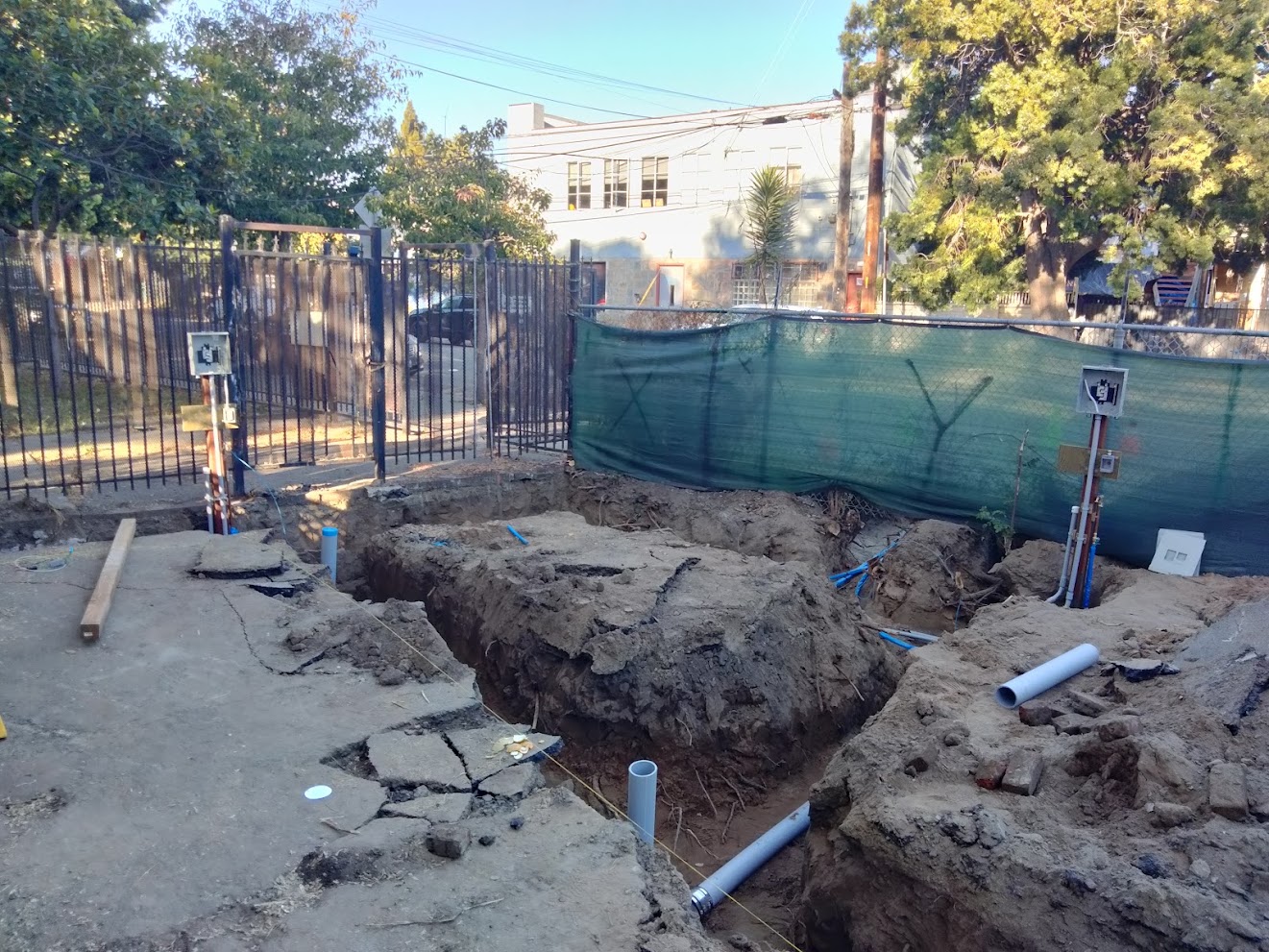
Here's Mike's PVC work by the service entrance.
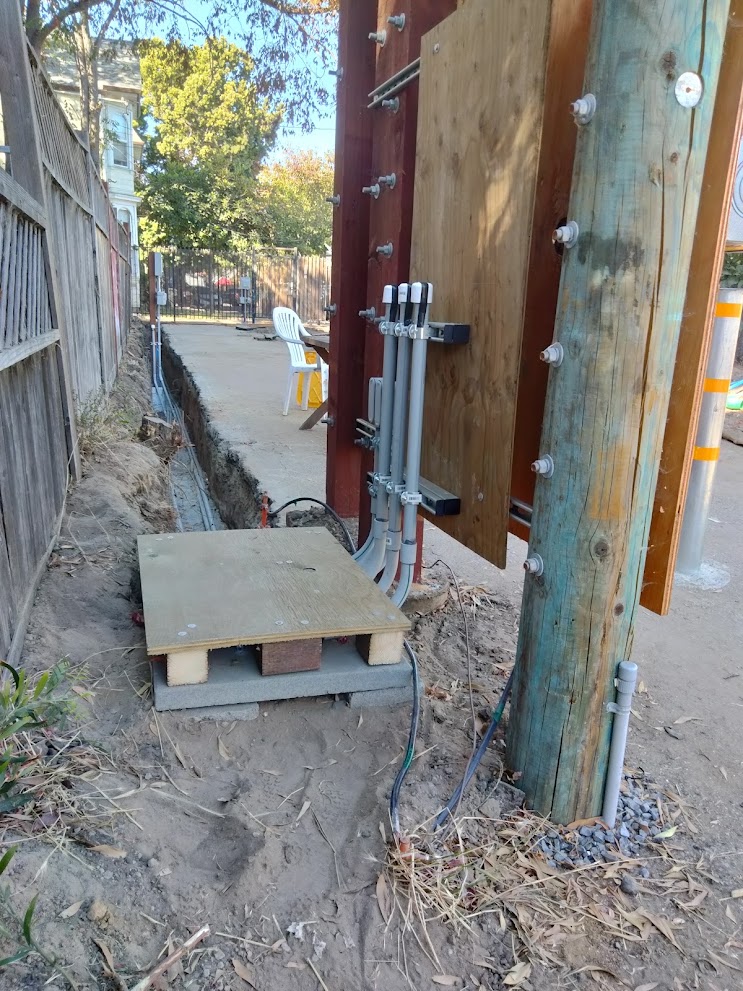
Here's a sturdy platform on top of the PVC noise.
Here's one of the three trailer pedestals.
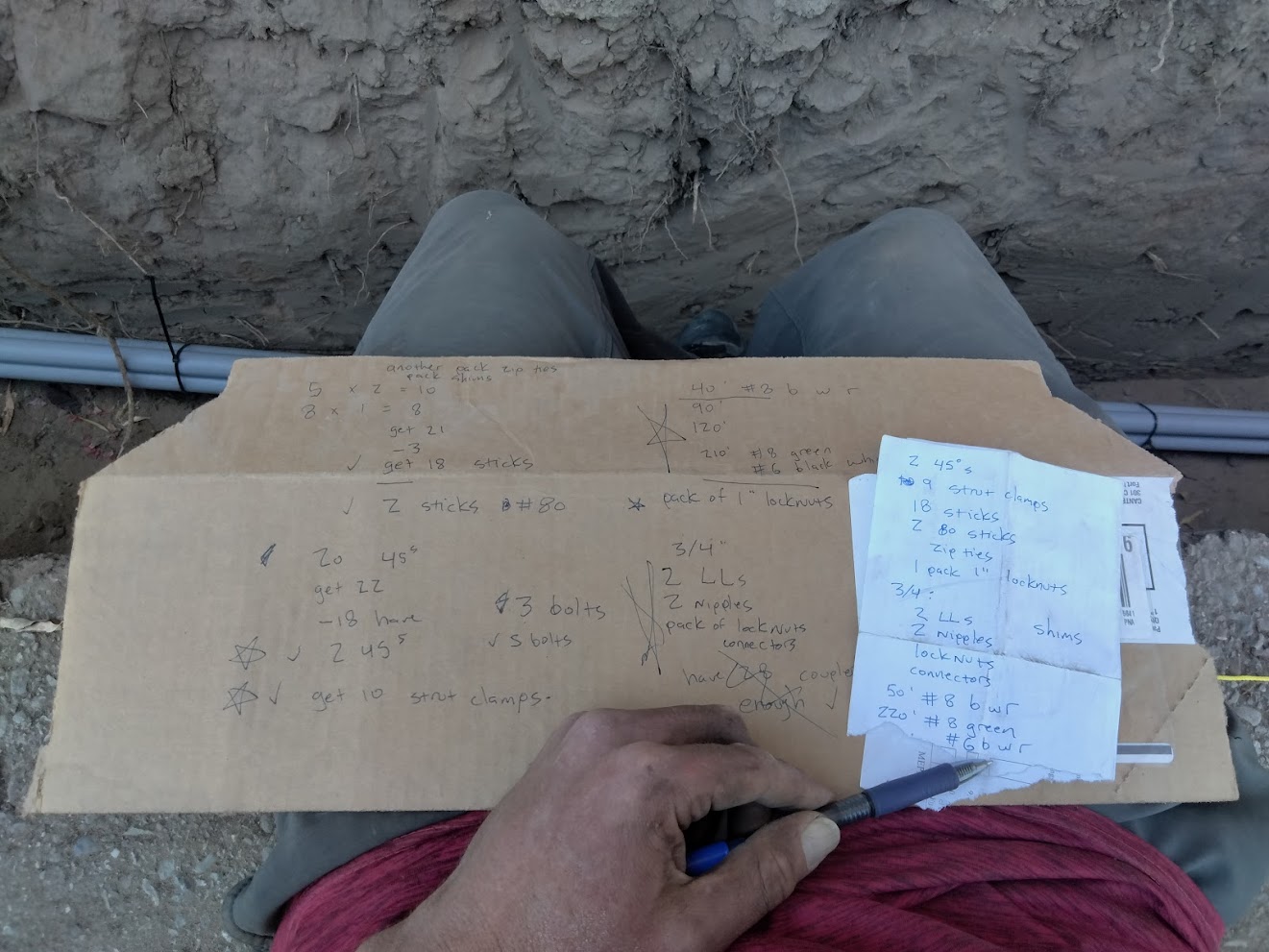
(Here's one of Mike's job-site shopping lists 🫠.)
I thought the work would take a week. It took two. This was another ass-kicking hero's journey. ...That included a 30+ hour work shift before an inspection (included frantic scrambling around Home Depot before their 10pm closing time >> begging to be let into nearby Chick-fil-A a minute after their closing time (they let me in)).
Despite the ~ten solo PV installs etc... I've never felt right about calling myself an "electrician". Undeserved. But now, after this job... fuck it, I AM AN ELECTRISHUN (albeit part-time).
This isn't a "lessons learned" blog post, except for this: I was deep in the dumbassery with my wire pulls. There were trenches everywhere and my (solo) ill-advised wire-pull approach was to lay out wire and pull it over a ladder down thru the subpanel... setting up five feet of wire at a time... stroking that #6 with enough lube to stock a porn studio. Some restarts because the wire just stopped pulling (three #6s + one #8 in one-inch PVC, and my fittings weren't on totally tight (fail), and — for the farthest run — 360 degrees of bends). John, who was leading the water / sewer work, kept saying "bro... you need a helper" (but that's not my style).
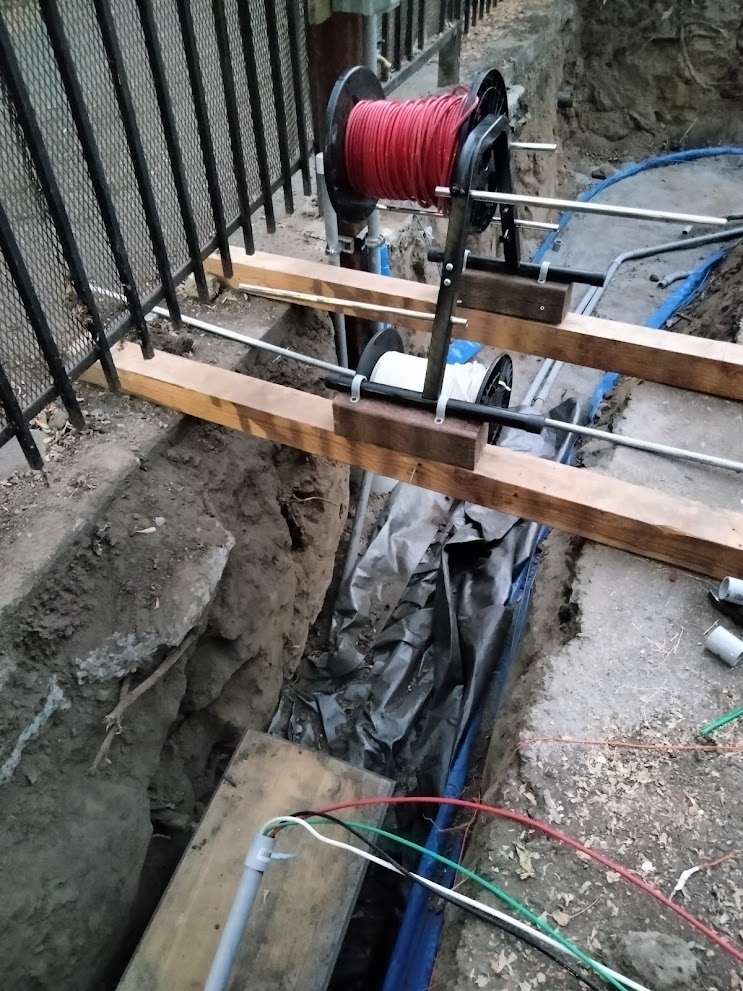
I eventually had the revelation to cut the PVC in the trench and tilt it up, so I could feed wire from a custom wire-reel stand over the trench. Here's a photo of the partially-dismantled stand. Easy. The advice: If you're doing something that's clearly mickey-mouse bullshit... STOP... spend the time instead to set yourself up for a more reasonable process. "Give me six hours to chop down a tree and I'll spend the first four sharpening the axe."
Before our current spot, we owned / lived in a tiny home on wheels for two years. We paid $400/mo to rent a side yard. I think tiny-home living could have worked for us... but the tiny home was a big modern box with minimal cabinetry — an Airbnb space, not a family space. (Our kid and her friends loved her ladder-accessed loft. I loved how quickly our composting-toilet poop turned into Earthy-smelling dirt.)
There are a lot of vacant lots in Oakland. Some can't be easily developed because of contamination (e.g. one near us used to have a gas station). (I want to get into bioremediation.)
I'm super down with tiny homes on wheels. I'm not down with all the indoor residential sprawl in this country. Dead cold rarely-used space. So much of it more about vanity than quality of life. Here's to low-cost debt-free living, with small but super comfy / thoughtful indoor spaces and ample outdoor space. With nowhere to run from family tension so you better work it out. With the freedom to take your in-tact home to the forest, the prairie, the city, the beach, the desert...
An above-board (i.e. government-sanctioned) urban trailer park in California... rare. HUGE props to my friend Adam Garrett-Clark for managing this project (his website is here). Huge props to founder Anjana Vakil for hanging in there and trusting the process.
BTW: I'm gonna rock "trailer park". With love. Trailers are awesome. Parks are awesome. But one can only rock "trailer park" (without neighborhood revolt) if the space is actually clean and aesthetic.
This trailer park is called: Tiny Intersection. Here's its website.
It's under the jurisdiction of the California Department of Housing and Community Development (HCD). The City of Oakland's jurisdiction is limited to the PG&E / line side of the power and the East Bay Municipal Utilities District (EBMUD) side of sewer and water. For the former, a City rep came on site to inspect the service-entrance equipment. For the latter, they just inspected at the sidewalk.
The HCD inspectors were friendly and cooperative. Their code-compliance requirements are similar to the City's (note though: the HCD requires two ground bars at each trailer pedestal (in addition to the ground rods at the service entrance, where the neutral <> ground bond is)).
This trailer park, at this spot, wouldn't be permitted without Oakland's "tiny-home-legalization" ordinance from 2021 (webpage here). I learned from Adam: the ordinance permitted tiny homes throughout the city — otherwise they'd be limited to few-and-far-between zones.
Thru the Oakland ordinance, two or more tiny homes at a lot requires HCD oversight. There's an exemption for non-profits, but Adam concluded it's easier to work with the HCD than to create a non profit just to get the exemption.
Adam and Anjana worked thru a lot to get this project greenlighted. ...They took on enough, without challenging the ostensible utility power / water / sewer connection requirements. They blazed the new-Oakland-trailer-park trail.
I was 🎷 very jazzed 🎷, talking with Adam about the possibility of: an Oakland trailer park with zero utility connections. This resonates for him, although he values pragmatism. With no City jurisdiction (although I'd want to be on good terms with the City... not a rocking-chair-and-shotgun-at-end-of-driveway sitch).
In 2026, no PG&E connection is totally feasible. PV + batteries (including bi-directional EVs) + sound-proofed propane generator (or possibly hydrogen fuel cells) + load control (e.g. turn off or throttle EV charging and heat pumps as needed).
Instead of a sewer connection... poop composting and, separately, (nutrient-rich sterile) pee basin / irrigation (requiring "urine-diverting" composting toilets). Government approval for this at a city lot... uphill battle. They need to be convinced that it'll be managed responsibly — following best practices with regular testing. A pilot project will probably require a sewer-connected toilet facility as a fallback. ...Demonstrate that it's unnecessary over the course of a year to get approval for no connection at future sites.
Instead of a water connection... use spare PV to dynamically pull household water from the air ("atmospheric water generation" (AWG)). Here's one of the AWG products out there. Relying on this for all household water use... would require a lot of PV (e.g. 60 extra modules per household)... so not practical for postage-stamp lots.
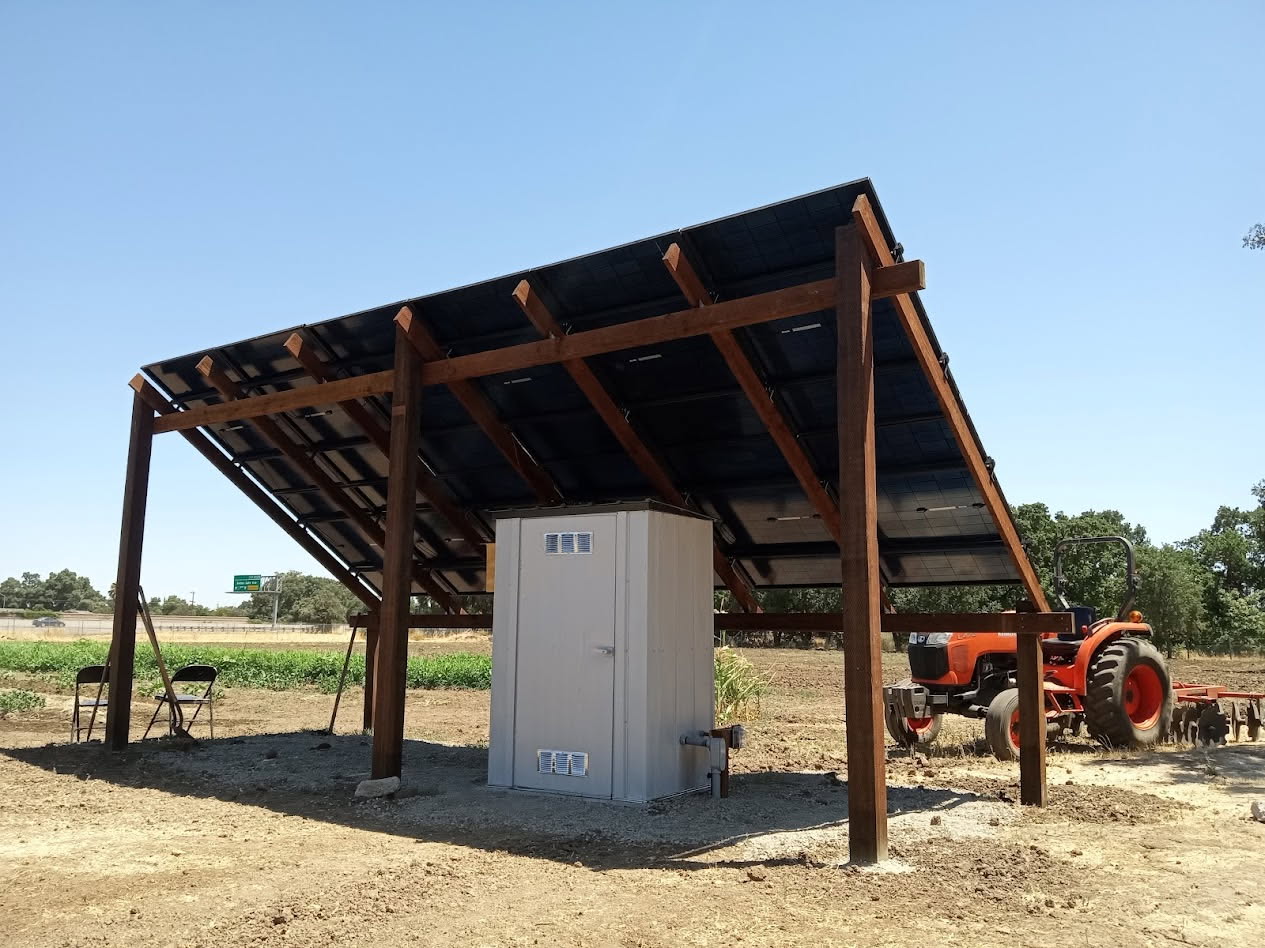
Combine AWG with rainwater harvesting. The latter just for irrigation, or possibly also for household use (with appropriate filtration). Get both water sources thru one or more big PV shade structures (a bigger version of this, with lower tilt). Big flat glass collection surfaces... modules are so cheap now that they're worth considering as a building material, let alone for power production. Big water tanks... maybe underground. A pilot project will probably require a City-water-connection backup (again, demonstrate that it's unnecessary over time).
Possibly also a well.
Ideally, supplement food with site-grown permaculture gardens and maybe chickens and goats and other Old MacDonald shit. And have a shared ~commercial kitchen for freezing / processing (perfectly-good) dumpster food (here's one of my scores back when I was diving (I want to get back into it)).
Plow the money not spent on utility connections into 🔥 💪 baller infrastructure 💪 🔥.
Again, no utility connections would require a ton of bureaucracy-interfacing work and some champions on the inside (in government). To lube up the process (and do the right thing): Establish the site as an emergency shelter / disaster assistance center (armed to the teeth so thugs don't just take it if / when shit hits the fan). A replenishing urban water source... a good thing to have with the real threat of bioterrorism. Also, consider hosting workshops on composting toilets, rainwater harvesting, etc.
There's a money argument with electricity. There might also be a money argument with sewer and water (and food) (TBD).
Also: As an exercise in community resilience. Things are moving too damn fast and reckless brash petty squirts have too much power. We don't want to have to go way out yonder to not be hopelessly dependent on giant hierarchical fraught organizations. ...Be better prepared for potential collapse, while improving quality of life if that 🤞 never happens 🤞.
Also: It's fun and exciting small-scale engineering / nature-interfacing challenge. The community that builds around it... fun and exciting social / emotional challenge.
Thanks to the resilience builders 🙌
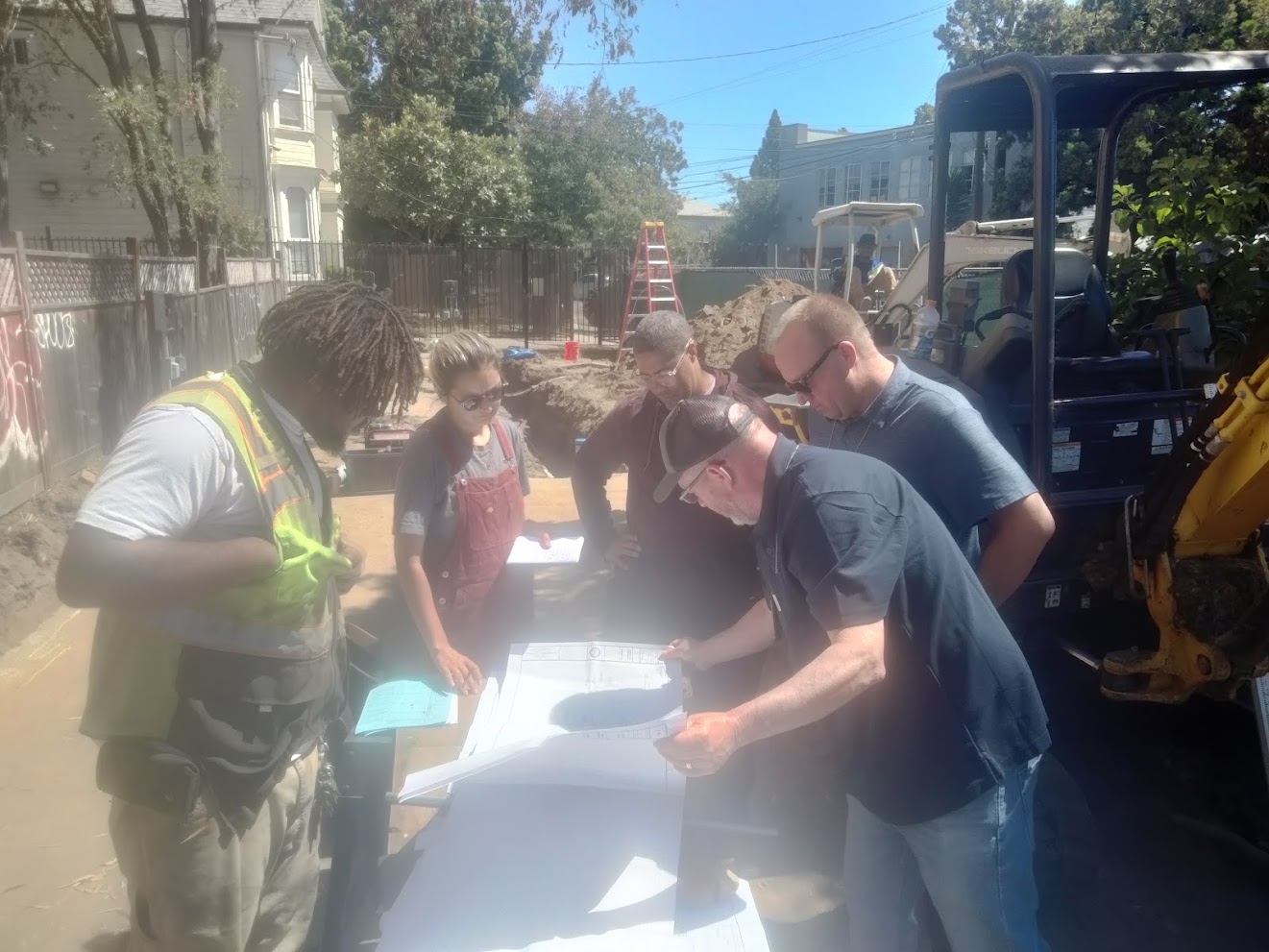
I'll outro with a photo from the HCD inspection (from left clockwise: John who led water + sewer, Anjana, Adam, and inspectors (and Kendrick in the tractor)):
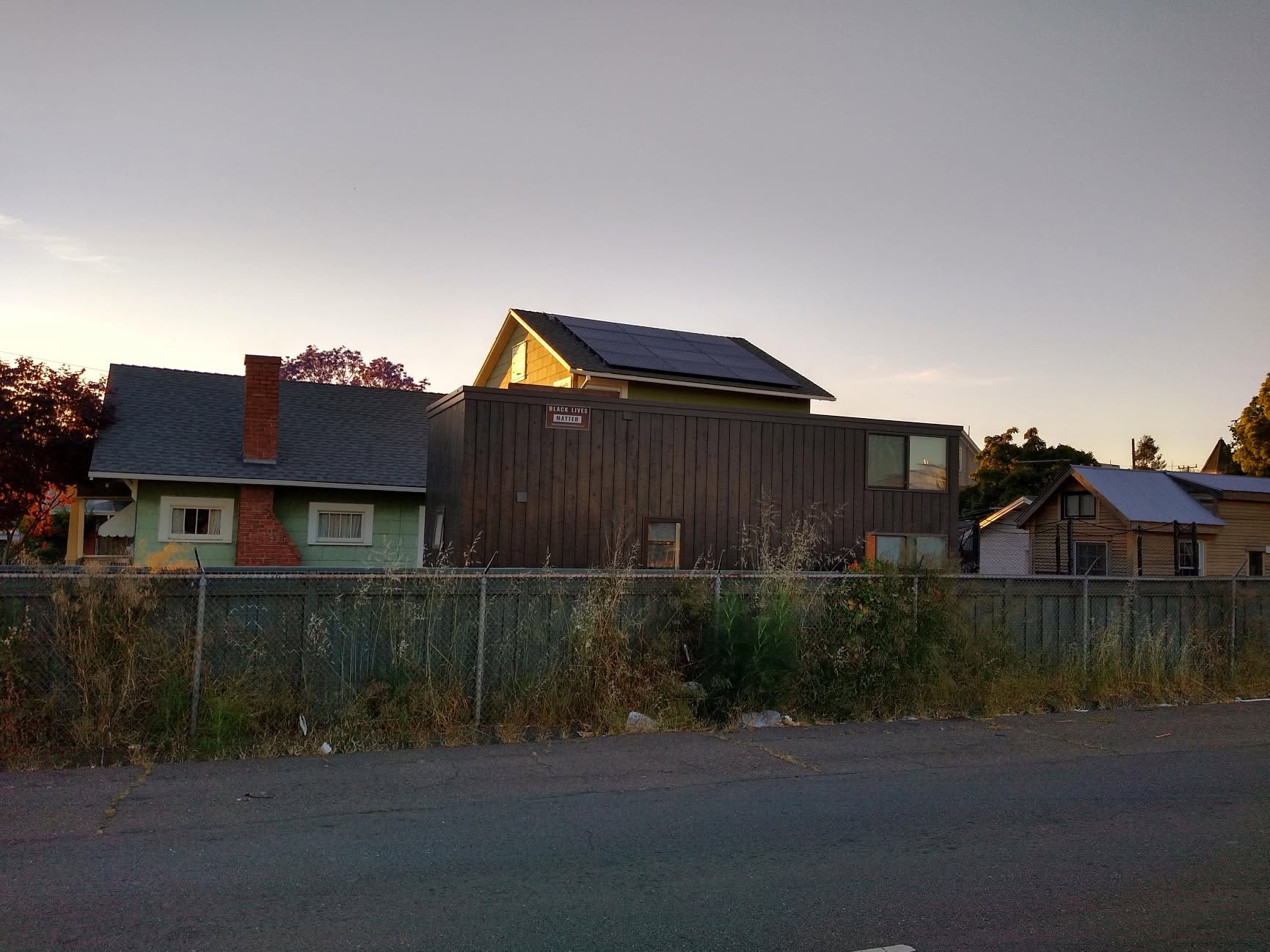
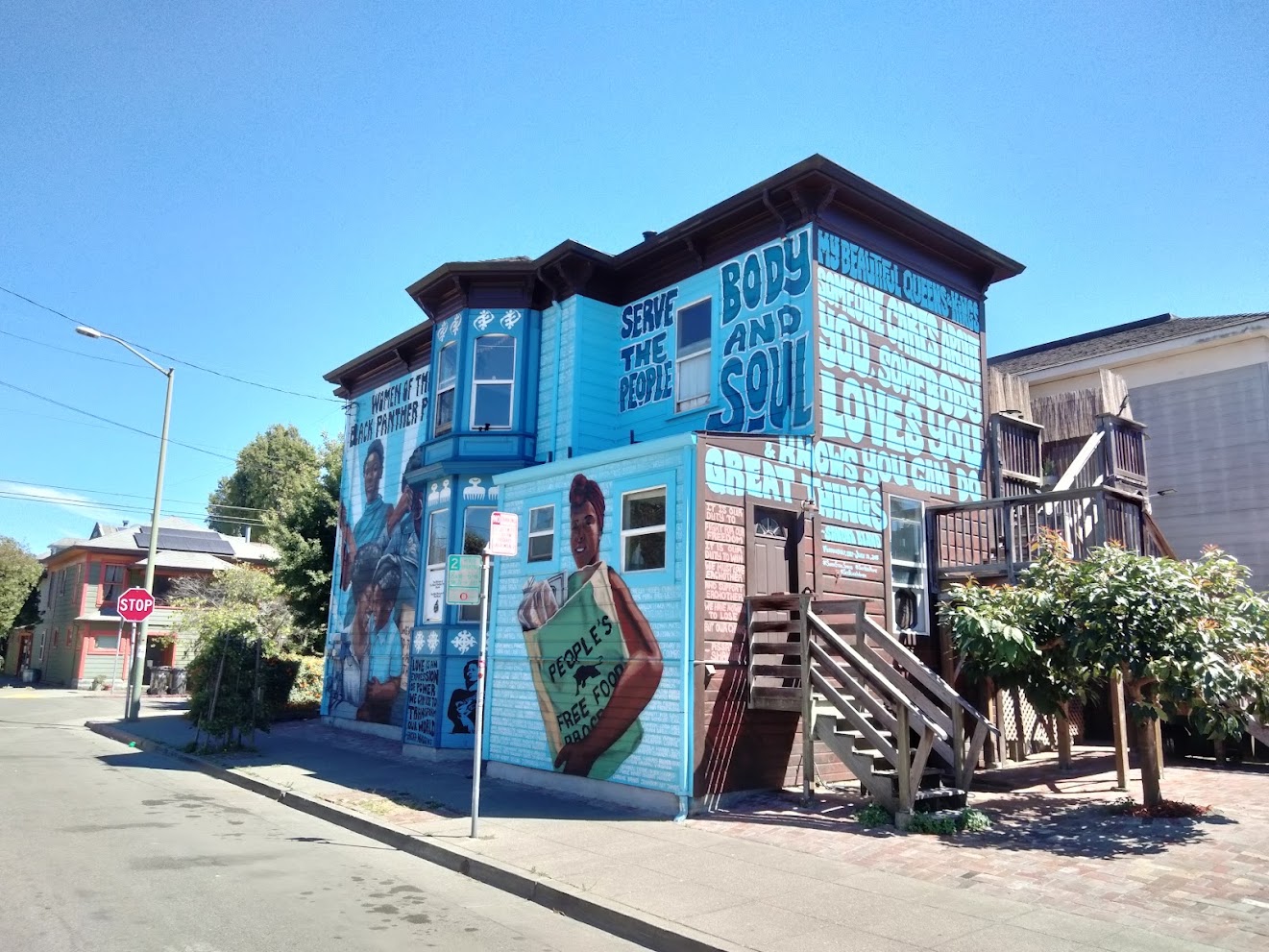
Bonus, dig this radical stone's-throw-away spot (yeah Oakland!):
COPY-PASTE FOOTER STUFF:
Join (or leave) my once-a-month email-newsletter list here.
This blog and AI: I use AI all the time, to understand things better. But these blog posts are 100% written by Mike (for better or worse).