This is part 2 (out of 4) of the EnergyNet white paper. Part 1 (with my little preamble) is here.
Just like the telecom industry once relied on the POTS, the world's energy infrastructure still remains dependent on the POGS. Like POTS, the traditional energy grid was groundbreaking at its inception but has become a rigid, outdated infrastructure incapable of adapting to today's technological innovations and decentralized renewable energy solutions.
EnergyNet is a new grid architecture. Similar to how Fiber-to-the-Home (FTTH) and Fiber-tothe-Building (FTTB) broke the bottleneck of the POTS, EnergyNet can now break the bottleneck of the POGS. We describe the path forward in practical terms on how to build the new grid for the 21st-century.
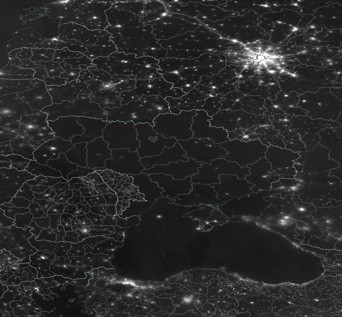
Fig. 2. NASA satellite image of from November 24, 2022. Source: NASA/NOAA Black
Marble {9}, illustrating the national blackout effect in Ukraine.
The November 2022 missile attacks on Ukraine's energy infrastructure vividly illustrated the critical vulnerability of centralized grid systems, referred to as POGS. Despite Ukraine's vast geography and extensive energy infrastructure, a relatively small number of targeted missile strikes on crucial facilities resulted in severe and widespread blackouts.
A handful of missile hits had a disproportionately large impact, exacerbated significantly by necessary protective measures implemented by Ukraine's Transmission System Operator, Ukrenergo {10}. Despite heroic restoration efforts by Ukrainian engineers and energy workers, protective measures included preemptive blackouts to safeguard the grid from catastrophic cascading failures, further magnifying the societal and economic consequences.
The stark NASA satellite image (Fig. 2) from November 24, 2022, powerfully captured this impact, showing Ukraine plunged into near-total darkness in contrast to neighboring countries still illuminated. This event highlights the fundamental fragility inherent in centralized energy systems and underscores the urgent need for decentralized resilient energy solutions capable of maintaining local power supplies despite targeted disruptions.
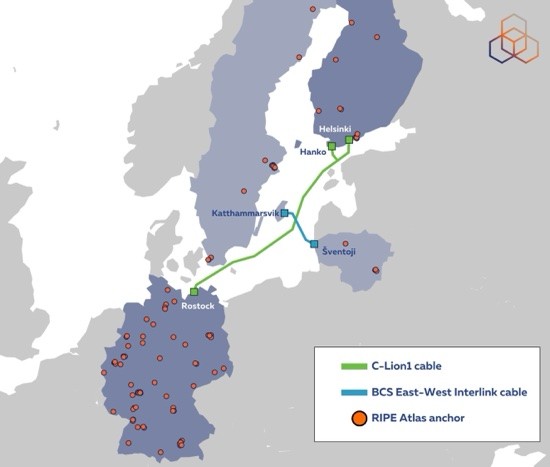
Fig. 3. Source: RIPE Labs {11}; Map demonstrates the Internet's resilience, with its "no- single-point-of-failure" architecture for critical infrastructure that already is a practical fact.
The Baltic Sea cable disruptions in November 2024, involving the simultaneous cuts of the C- Lion1 (Finland-Germany) and BCS East-West Interlink (Sweden-Lithuania) submarine cables, clearly illustrated the resilience of the Internet's decentralized architecture. Despite the severity and strategic timing of these disruptions, RIPE Labs' comprehensive analysis using the RIPE Atlas network revealed minimal negative impact.
Specifically, RIPE Labs {11} found no significant packet loss across their monitoring network, indicating that data flows swiftly rerouted around the damaged cables. Although 20% to 30% of Internet paths experienced minor latency increases, the majority remained unaffected, underscoring the Internet's built-in redundancy and adaptive routing capabilities.
This incident sharply contrasts the vulnerabilities exposed in traditional centralized infrastructures, such as electricity grids, during similar targeted attacks. It highlights the superior resilience of distributed, redundant, and dynamically adaptive network architectures. The Internet's robust response to the Baltic Sea cable cuts thus provides a proven architectural template, reinforcing the rationale for adopting similarly resilient decentralized approaches, such as EnergyNet, in critical infrastructure systems.
A Software-Defined Energy Distribution Layer
The core innovation behind EnergyNet is architectural: it decouples local energy systems from the constraints of the legacy grid and enables flexible, digitally orchestrated distribution using modern digital technology. Like the Internet did for information, EnergyNet introduces a software-defined routing layer for electricity.
4.3 Internet as an Architectural Model for EnergyNet
To understand EnergyNet's approach to energy distribution, consider how the Internet itself is structured. The Internet is not one single physical network; it's a hierarchy of logically defined networks, each optimized for specific tasks: LAN, WAN, and global Internet.
4.3.1 Local Area Network (LAN)
A LAN is the local network, such as your home or office network, which connects your devices. It's defined logically, not geographically, by local control and high-performance internal connectivity. In energy terms, this corresponds to a single building or a neighborhood microgrid, which manages local energy flows autonomously, prioritizing resources according to where and when energy is needed.
A WAN connects multiple LANs, linking networks logically rather than by simple geography. An example is an Internet Service Provider's network, which connects thousands of individual home and business LANs across a city, country, or globally. In EnergyNet, the equivalent is a district or citywide energy distribution network, coordinating energy flow across multiple neighborhoods or districts, dynamically balancing energy resources. Please note that WANs are logical, not primarily geographic concepts.
Above WANs sits the global Internet — an interconnected system of independent WANs, each managed as Autonomous Systems (AS). This global layer is where WANs communicate using standardized protocols like Border Gateway Protocol (BGP), allowing decentralized yet coordinated global routing of data. In the EnergyNet analogy, this represents the overall interconnected energy network — coordinated globally yet managed independently and locally. Just as BGP provides a secure, open, and robust mechanism for global data routing, the EnergyNet's open protocols allow similar dynamic coordination, based on different policy inputs such as pricing or priority for resilience, and enable large-scale sharing of energy.
This layer model, devices within LANs, LANs interconnected by WANs, and WANs coordinated globally by Internet standards, maps directly onto EnergyNet's architecture. Each local energy router (LAN equivalent) autonomously manages its own resources, clusters of energy routers (WAN equivalent) dynamically negotiate energy exchanges, and a global coordination protocol (BGP equivalent) ensures flexible, secure, and scalable orchestration within the EnergyNet, and digital interaction with the traditional grid operators.
Thus, the Internet's proven logical structure provides a roadmap for how EnergyNet can redefine energy distribution: decentralized, software-defined, and coordinated dynamically, at every level.
The traditional AC grid is based on a centralized, top-down architecture designed for unidirectional flow: power plants generate, transmission lines carry, and end-users consume. This design made sense when electricity generation was scarce, centralized, and predictable.
In contrast, today's energy landscape is becoming more decentralized, dynamic, and digital. Homes, buildings, and vehicles can now generate, store, and share energy. But the legacy grid - POGS — was never built to accommodate this. EnergyNet addresses this mismatch by offering a parallel routing layer that operates alongside the existing grid, providing:
> Local autonomy with global interoperability.
> Bidirectional, prioritized energy flows.
> Digital control via open coordination protocols.
> Firewalled interactions with the legacy grid.
This is not a replacement of the legacy grid; it's a layered new integrated architecture. EnergyNet adds intelligence, modularity, and programmability to the edge of the grid, allowing energy to be routed, priced, and prioritized in near-real-time.
EnergyNet introduces a new, digital architecture for energy distribution. It decouples local energy systems from the constraints of traditional centralized grids; instead it enables dynamic, flexible energy flows. Inspired by the Internet's architecture, EnergyNet applies open standards, software-defined control, and decentralized coordination to create a robust, responsive energy infrastructure. EnergyNet's architecture revolves around three fundamental principles:
> Local autonomy with global interoperability.
> Bidirectional and dynamic energy routing.
> Software-defined coordination and open protocols.
EnergyNet's layered architecture mirrors the layered model of the Internet, clarifying roles, boundaries, and interactions at different network levels:
> LAN >> ELAN (Energy Local Area Network): Manages energy flows within buildings or neighborhoods, enabling immediate local optimization and autonomy.
> WAN >> EWAN (Energy Wide Area Network): Connects multiple ELANs, facilitating dynamic energy exchanges, load balancing, and regional coordination.
> Internet >> EnergyNet (Global Network): Links EWANs together on a national or international scale, coordinating energy distribution through standardized protocols and decentralized management.
Boundaries between ELAN, EWAN, and EnergyNet global networks are clearly defined and operate similarly to Internet routing hierarchies, utilizing internal coordination protocols analogous to OSPF and external protocols analogous to BGP.
EnergyNet solves frequency stability challenges in the traditional grid with digitally controlled galvanic "Firewall" functionality built into every Energy Router.
In the Alternating Current grid, frequency stability is critical. It is sometimes disturbed by unpredicted losses of power lines or large thermal power plants. When there were many synchronous generators in the system these contributed with short term stabilizing power. In modern systems you need electronic components to handle failures of remaining large thermal units or power lines. The batteries and electronics of the EnergyNet can contribute with stabilizing services.
EnergyNet addresses this challenge by introducing a digitally controlled "galvanic separation" functionality, a deliberate electrical isolation between local energy resources and the traditional grid, implemented via power electronics in the Energy Router.
Unlike a direct electrical connection, galvanic separation creates a clear digital boundary. Power flows across this boundary when, and only when, both sides explicitly agree, using a predefined digital negotiation process managed by software. This makes it possible to support the grid, while it will never be disturbed.
This approach is comparable to how the clearly defined border between LAN and WAN works on the Internet. In a simple example, the device managing the border is often called a Gateway. This unit typically contains at least these three functions:
> Switching (Layer 2): Allowing devices within the local network (LAN) to communicate efficiently at high speed.
> Routing (Layer 3): Managing traffic between the local network (LAN) and external networks (WAN/Internet) using IP addressing.
> Firewall & NAT Functions: Implementing basic security measures — Network Address Translation (NAT) and firewall rules — to protect the local network from unauthorized external access.
The Gateway device has two distinct sides:
LAN Side (Local):
> Uses private IP addresses (e.g., 192.168.x.x or 10.x.x.x).
> Manages communication internally within your home or office.
> Ensures all devices can communicate seamlessly within the local network.
WAN Side (Global):
> Assigned a global (public) IP address by your ISP.
> Manages external communication, connecting your LAN to the wider Internet.
Between these two sides, the Gateway typically implements Network Address Translation (NAT):
> NAT Functionality: Converts private local addresses into a single, publicly routable IP address, allowing multiple devices to share a single external connection.
> Traffic Flow Control: Communication between LAN and WAN sides occurs only when explicitly agreed upon — initiated by devices on the LAN side or configured through rules. No data crosses unless both sides confirm compatibility and security.
A gateway provides basic firewall principles, in the sense that it acts as a clear, managed boundary controlling traffic flow between two distinct networks.
Specifically, it:
> Blocks unsolicited external traffic: By default, the gateway allows local traffic to initiate connections outward but prevents unsolicited inbound connections from the WAN side.
> Manages rules and permissions: Like a simple firewall, it allows users to define rules about what type of communication is permitted, blocked, or selectively forwarded.
> Ensures controlled interoperability: Traffic only crosses from WAN to LAN if explicitly permitted, protecting the local network from unwanted or unauthorized external communication.
The Gateway demonstrates the Firewall principles as a protective boundary between local and external networks, ensuring both independence and interoperability.
Each side (LAN and WAN) operates independently:
> If disconnected from the global (WAN) side, the LAN side continues functioning autonomously, allowing local devices to communicate without interruption.
> The Gateway's internal router functionality ensures local traffic is seamlessly managed even without WAN connectivity.
In short, a Gateway with integrated routing serves as a controlled and intelligent boundary, enabling secure, deliberate interaction between local and global networks, while preserving full local functionality in isolation.
This digital approach provides multiple advantages:
> Frequency Stability: Local renewable energy resources can operate independently, without directly impacting the main grid's frequency stability.
> Controlled Interaction: Energy exchanges occur only when beneficial to both sides, preventing local fluctuations from cascading into the wider network.
> Dynamic Flexibility: Digital rules can be easily adapted to changing conditions or policies, allowing dynamic balancing and negotiation of energy transfers.
In short, galvanic separation through digitally managed power electronics not only solves the frequency stability problem introduced by intermittent renewables but also introduces a safer, more flexible, and robust method of coordinating energy distribution across different layers of the grid.
The white paper is continued here (part 3 of 4).
All white-paper references are here.